
Baybayin to Tagalog Translator
Paste Baybayin script or click the characters to build it, and see how it reads in Tagalog.
Baybayin Reader: Characters to Text
This tool reads sounds. Where Baybayin uses one character for two sounds (i or e, u or o), it shows i and u and lists both options in the syllable line. Always confirm the final Tagalog spelling against the word you expect. Prefer typing real script? Try the Baybayin keyboard.
What Reading Baybayin as Tagalog Really Means
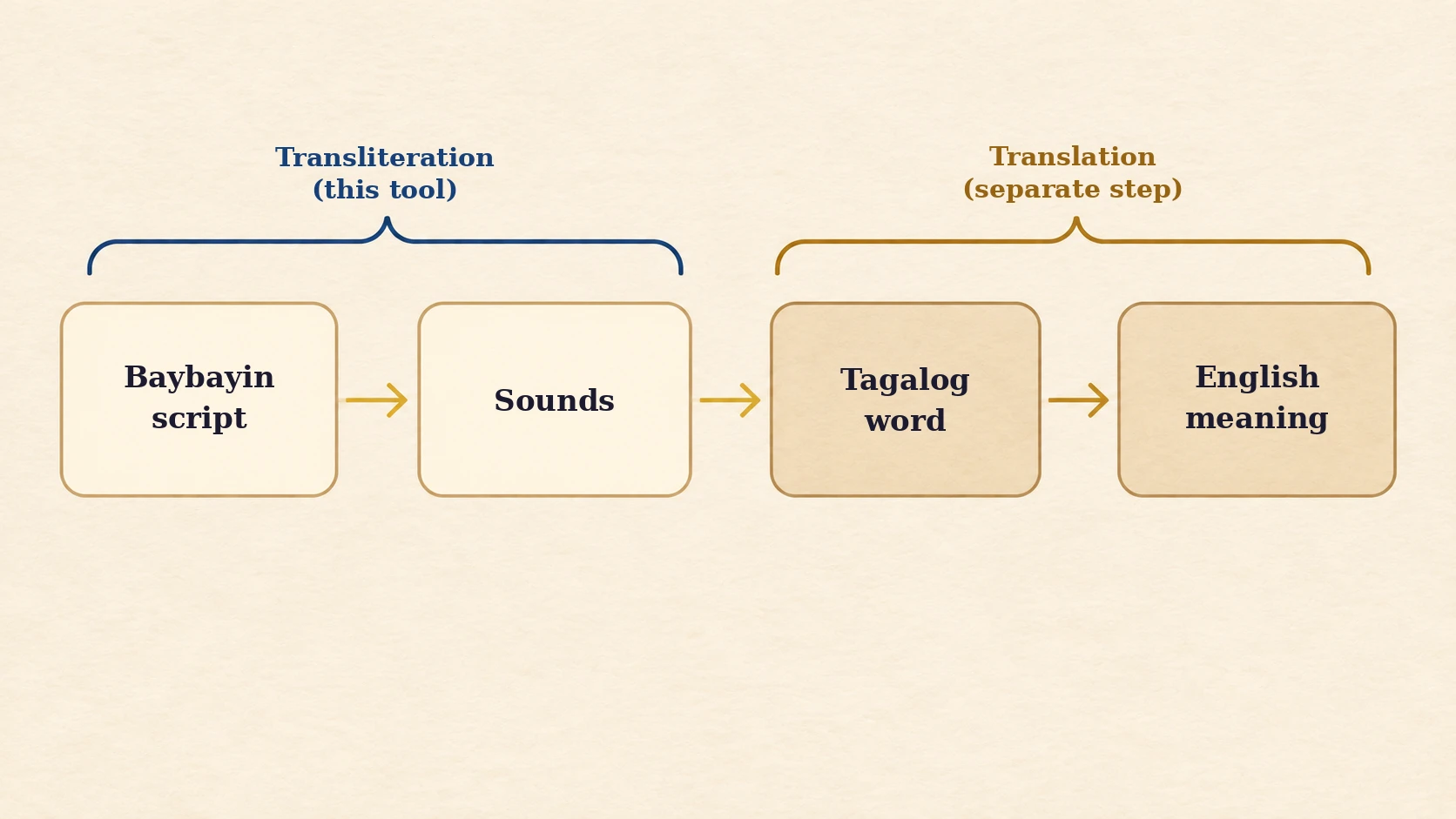
Baybayin is a writing system, not a language. It was used to write Tagalog and other Philippine languages, so the characters tell you how a word sounds, not what it means in another language.
That is why turning Baybayin into Tagalog is transliteration: you convert each character back into its sound, then recognize the Tagalog word. Translating the meaning into English is a separate step that comes afterwards.
Most online tools only go one way. If you need to write a word in the script instead, use our Baybayin Translator. This page handles the opposite job, which is decoding script you have already found on a tattoo, artwork, a school handout or a social post.
How Baybayin to Tagalog Reading Works
Reading follows three checks, in this order, for every character.
1. Identify the base character
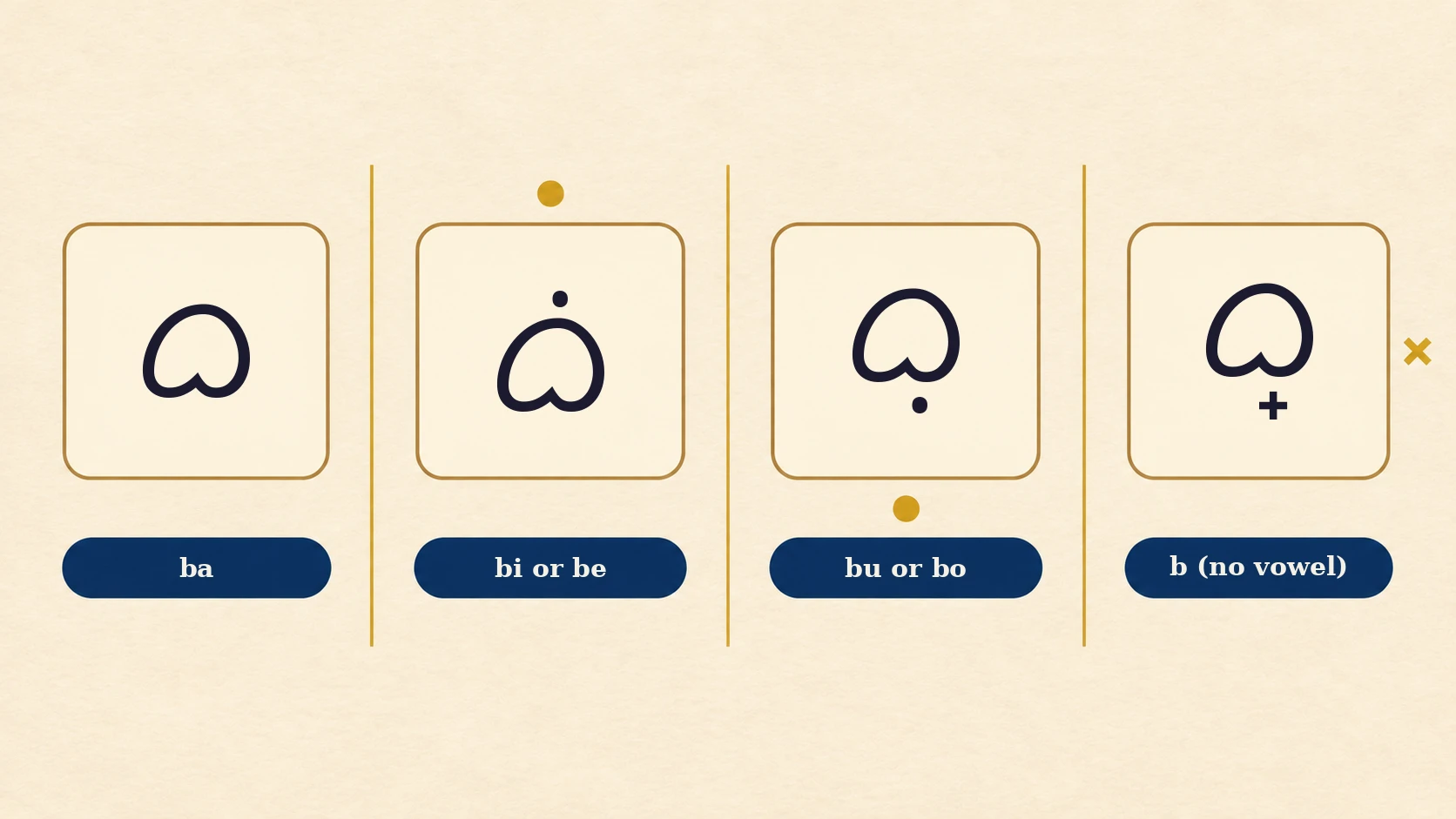
Each consonant character carries a built-in “a” sound, so the character for B is read “ba”. The three vowels (a, i/e, u/o) stand alone. If you need a full chart of all 17 characters, see the Baybayin alphabet guide.
2. Look for a kudlit above or below
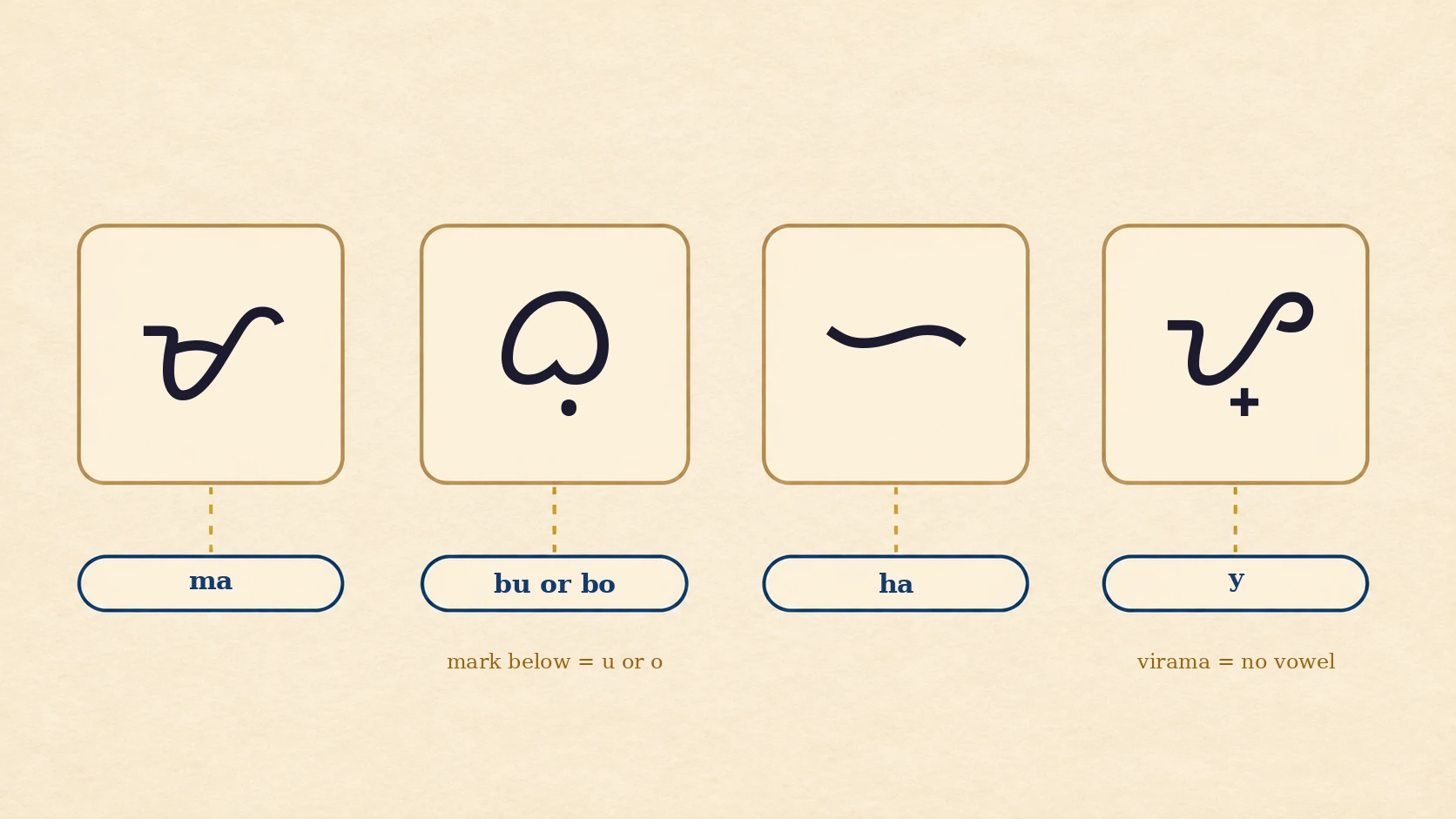
A mark above the character changes the vowel to i or e. A mark below changes it to u or o. Many beginners misread the position, so check it every time.
3. Look for a virama
A virama (a small cross-shaped mark in modern writing) cancels the vowel and leaves a bare consonant, such as the final “l” in mahal. Older text usually leaves final consonants unwritten, so you supply them from context.
Worked examples
| Baybayin | Syllables | Tagalog word |
|---|---|---|
| ᜋᜑᜎ᜔ | ma · ha · l | mahal |
| ᜐᜎᜋᜆ᜔ | sa · la · ma · t | salamat |
| ᜋᜊᜓᜑᜌ᜔ | ma · bu · ha · y | mabuhay |
| ᜉᜓᜐᜓ | pu · so | puso |
Try each one in the reader above. Because the u/o character defaults to u, “puso” appears as “pusu” with the o option listed in the syllable line.
Why One Reading Can Have More Than One Answer
- Shared vowels. One character covers i and e, and another covers u and o, so “ᜊᜓ” can be bu or bo.
- Shared D and R. Traditionally one character served both sounds, so the reader chooses from context.
- Missing final consonants. Without a virama, a word like salamat can look like “salama”.
- Names and loanwords. Sounds such as F, V and Z are approximated, so the Latin spelling behind them can vary.
Baybayin to English, Alibata and Google Translate
For Baybayin to English, read the script into Tagalog first, then look up the Tagalog word. Skipping that step is where most wrong results come from. The same applies to Baybayin to Filipino and Baybayin to Latin: the reading comes first.
You may also see “Alibata” used for the same script. It is a twentieth-century name that historians consider inaccurate, so Alibata to Tagalog searches lead to exactly the same method. The story behind the name is covered in Baybayin vs. Alibata.
Google Translate does not read Baybayin characters reliably, and photo upload tools rarely recognize the script. Pasting Unicode text or clicking the characters above is the dependable route.