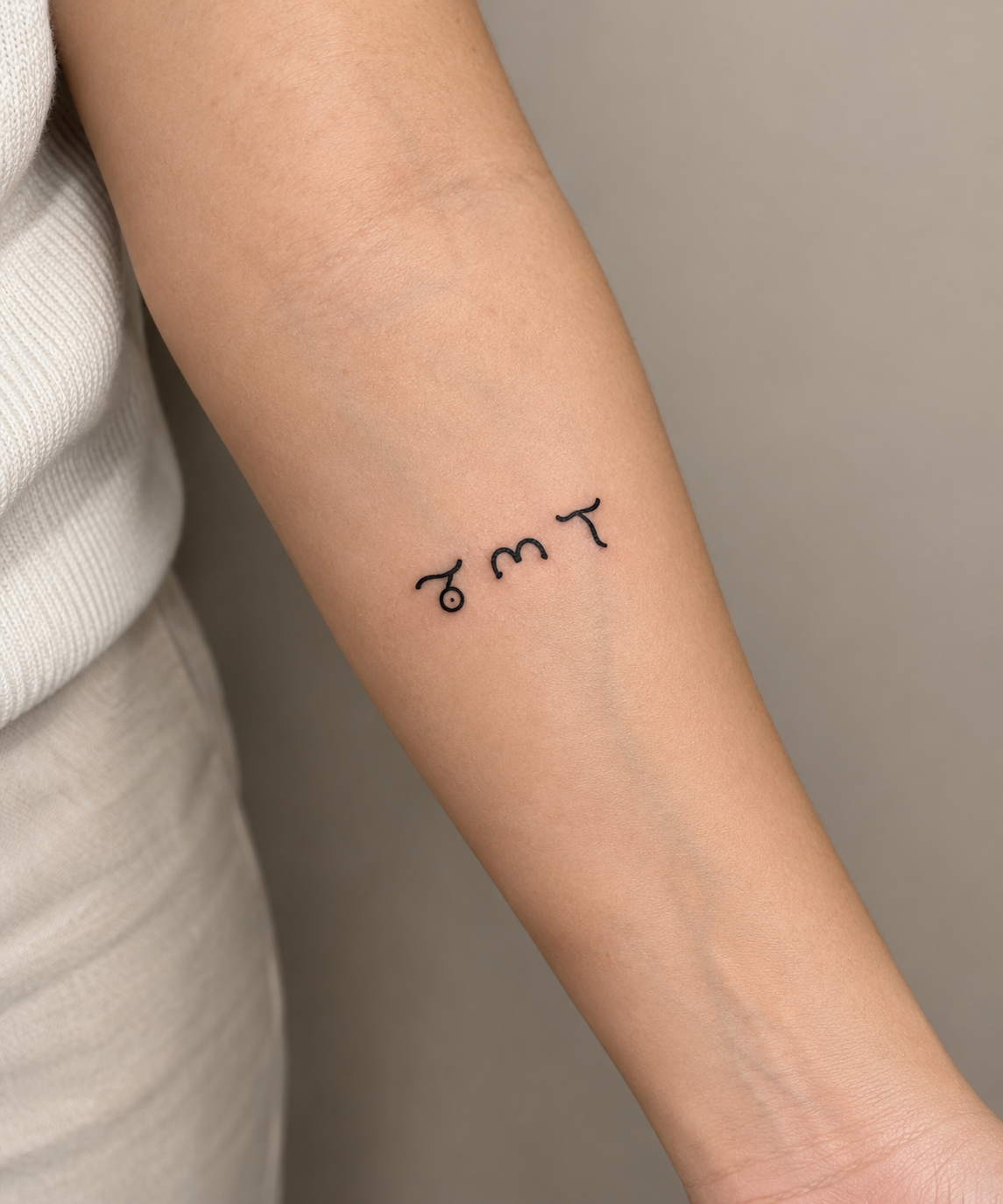
Baybayin Translator Name
Type your name and see it converted into Baybayin script instantly — free, with guidance on spelling sounds.
Translate Your Name
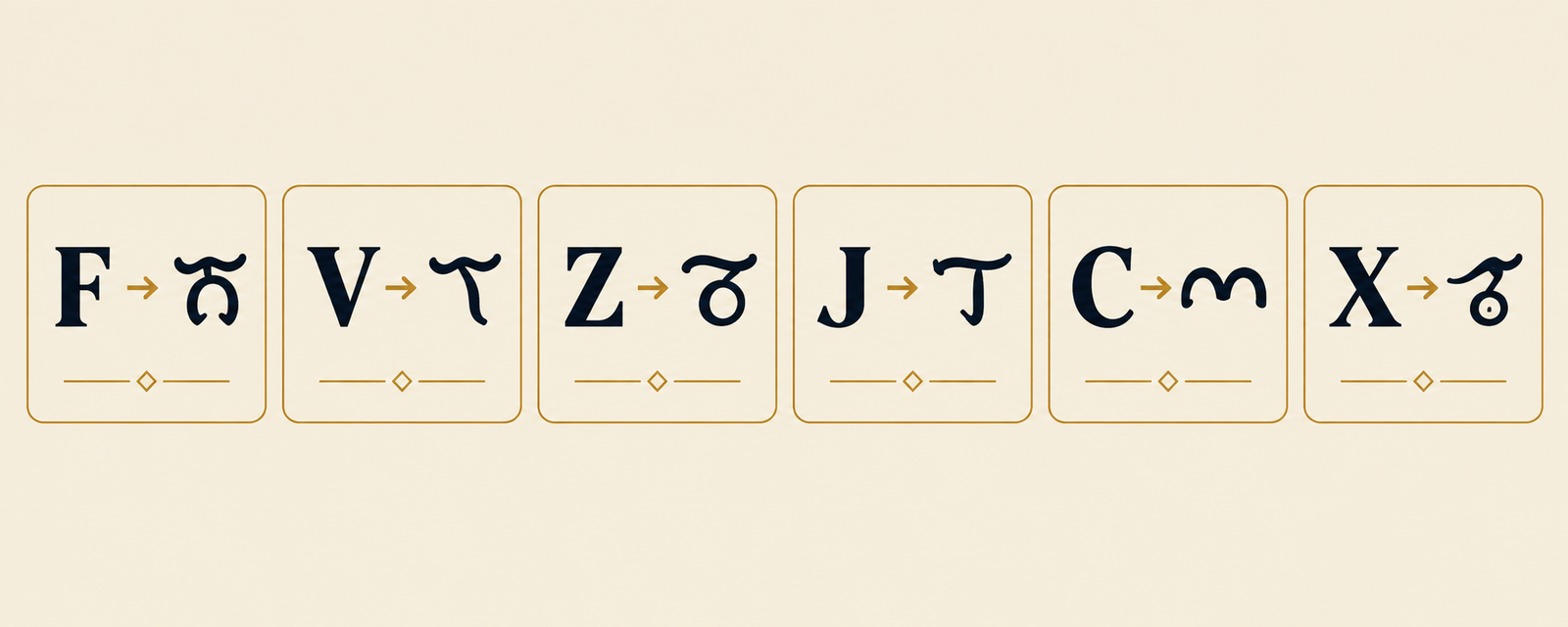
This tool spells your name phonetically — by how it sounds, not how it’s spelled in English. For names with sounds Baybayin doesn’t have (F, V, Z, J, C, Q, X), see the spelling guide below before you commit to a result. Translating more than a name? Try the full Baybayin Translator for words, phrases, and full sentences.
Converts names syllable-by-syllable. Enter a first name, full name, or nickname and the tool maps each sound to the closest Baybayin character, using the traditional 17-character set.
Type it the way it sounds. Baybayin has no letters for F, V, Z, or J. “Michelle” works best typed as it’s spoken — the tool already substitutes the closest native sound automatically.
Names can have more than one valid spelling. Because Baybayin encodes sound, not fixed spelling, the same name can reasonably be written more than one way. Treat your result as a strong starting point.
How to Write Your Name in Baybayin
Baybayin is a phonetic script — it represents sound, not English spelling. Before you translate your name, it helps to know which sounds the script has, and which ones it doesn’t.
Sounds Baybayin doesn’t have
The traditional 17-character set has no symbols for F, V, Z, J, C, Q, or X, and no way to write a consonant cluster directly (like the “str” in “Christine”). Names containing these sounds are approximated using the closest available Baybayin consonant:
| English sound | Closest Baybayin sound | Example |
|---|---|---|
| F / V | B or P | “Vince” → sounds closer to “Bins” |
| Z | S | “Zoe” → sounds closer to “Soe” |
| J | D (+ Y sound) | “Jan” → sounds closer to “Dyan” |
| C (hard) | K | “Carl” → sounds closer to “Karl” |
| C (soft) | S | “Cecil” → sounds closer to “Sesil” |
| Silent letters | Dropped | “Christine” → read as “Kristin” |
A simple 3-step approach
- Say your name out loud. Baybayin follows pronunciation, not spelling.
- Swap any unsupported sounds using the table above (F→B/P, V→B, Z→S, J→D).
- Type the adjusted spelling into the tool above — it handles the syllable-to-character mapping automatically.
Want the full character set behind this logic? See the Baybayin alphabet guide.
Common Names Translated to Baybayin
Not sure what your result should look like? Here are some frequently searched names already converted, so you can compare before and after.
| Name | Baybayin | How it’s read |
|---|---|---|
| Maria | ᜋᜇᜒᜀ | Ma-ri-a |
| Gabriel | ᜄᜊ᜔ᜇᜒᜁᜎ᜔ | Gab-ri-el (consonant clusters marked with virama) |
| Andrea | ᜀᜈ᜔ᜇ᜔ᜇᜒᜀ | An-dre-a |
| Michelle | ᜋᜒᜃ᜔ᜑᜒᜎ᜔ᜎᜒ | Mi-shel (approximated, no native “sh”) |
| Leo | ᜎᜒᜂ | Le-o |
| Joshua | ᜇᜓᜐ᜔ᜑᜓᜀ | Dosh-wa (J → D, “sh” approximated) |
| Angel | ᜀᜅᜒᜎ᜔ | An-gel |
| Miguel | ᜋᜒᜄᜓᜁᜎ᜔ | Mi-gwel |
These are phonetic approximations, not certified spellings — see Accuracy & Limitations below.
Accuracy & Limitations
A name translator built on a phonetic script can’t promise one single “correct” answer for every name — here’s why, specifically for names:
Names are interpreted, not looked up
There’s no master dictionary of English names translated into Baybayin. Every result here is generated by mapping sound to script in real time — which means two tools, or two fluent readers, can reasonably produce slightly different spellings for the same name.
Nicknames and shortened names
“Mike” and “Michael” will produce different results because they sound different — the tool translates exactly what you type, not a “formal” version of your name.
Surnames with foreign origins
Spanish, Chinese, and other non-Tagalog surnames common in the Philippines (e.g., “Dela Cruz,” “Tan,” “Reyes”) translate the same way as any other name — phonetically, sound by sound — which can feel unfamiliar even to fluent Filipino readers.